
South African IT outsourcing has quietly become one of the smartest moves a global business can make in 2026. Companies in the UK, Europe, the US and Australia are turning to South African tech talent for high-quality engineering, service-desk and managed-services work – without the runaway costs of hiring at home. In this guide we break down seven proven reasons South African IT outsourcing wins, what it costs, how it keeps your data safe, and how to get started.
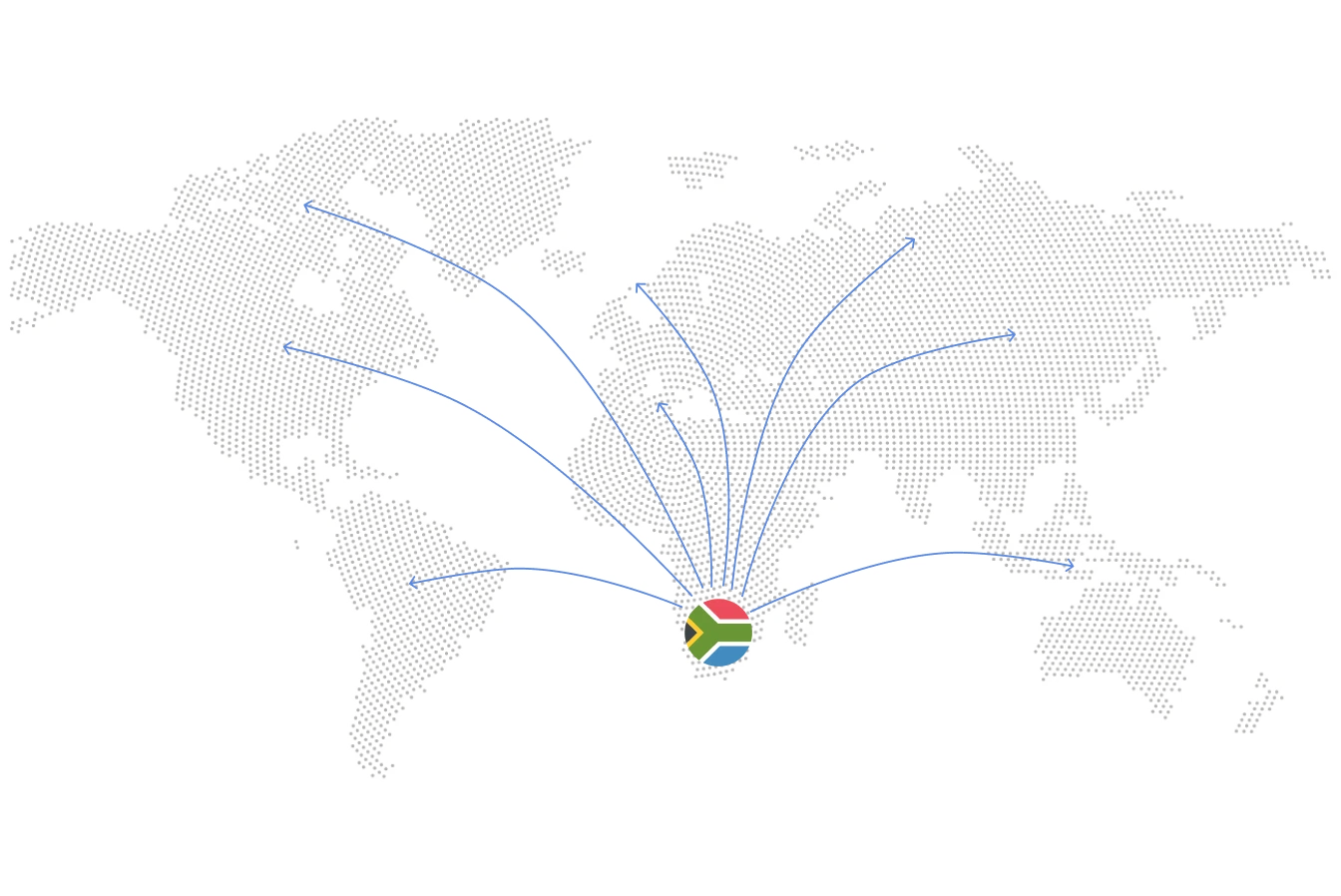
Table of contents
What is South African IT outsourcing (and outstaffing)?
South African IT outsourcing is the practice of delegating IT work – software development, support, cloud, cybersecurity or managed services – to skilled professionals based in South Africa. Outsourcing typically means handing over a whole function or project, while outstaffing means embedding dedicated South African tech talent directly into your existing team, under your day-to-day direction. Both models give you access to a deep, affordable skills pool while you stay focused on your core business. If you want the textbook definition, the concept sits within the broader field of IT outsourcing.
7 proven reasons South African IT outsourcing wins in 2026
1. World-class tech talent
South Africa produces a steady stream of well-trained developers, DevOps engineers, data specialists and support technicians. The country’s universities and private academies feed a mature market of certified professionals (AWS, Azure, Microsoft, CompTIA and more), so South African IT outsourcing gives you genuine depth of skill rather than just cheaper hands.
2. Real cost savings
Because of the favourable exchange rate, businesses hiring South African tech talent often cut fully-loaded staffing costs by 40–60% compared with local hires in the UK, EU or US – while still paying South African professionals a strong, competitive local salary. It is a rare win-win: lower cost for you, great pay for the team.
3. Timezone alignment with the UK and Europe
South Africa runs on SAST (GMT+2), which overlaps almost entirely with the UK and Europe and gives a workable window into the US East Coast. That means real-time collaboration – not the frustrating overnight lag you get from far-flung offshore locations. For MSP and help-desk work, this timezone fit is a huge operational advantage.
4. English fluency and cultural fit
English is a primary business language in South Africa, and the culture aligns closely with Western working norms. Communication is clear, documentation is strong, and onboarding is fast – three things that quietly make or break any outsourcing relationship.
5. MSP-ready skills
Managed Service Providers need people who can run monitoring, ticketing, patching and support at scale. South Africa has a thriving MSP ecosystem, so the talent already understands SLAs, ITIL-style processes and multi-client environments. That makes South African IT outsourcing a natural fit for MSPs looking to grow their delivery capacity.
6. Outstaffing flexibility
Not every business wants to hand over a whole function. Outstaffing lets you scale a dedicated team up or down month by month, keep full control of the work, and avoid long local recruitment cycles. You get the talent and the flexibility without the overhead of permanent local headcount.
7. Scalability and retention
A large, engaged talent pool means you can scale from one specialist to a full squad quickly, and strong local salaries plus meaningful international work keep retention high. Lower churn means your institutional knowledge stays put – a benefit that compounds over time.
Which IT roles can you outsource to South Africa?
Almost any modern IT function can be delivered through South African IT outsourcing. The most in-demand roles include:
- Software developers – full-stack, front-end, back-end and mobile engineers across popular stacks.
- Managed-services and help-desk technicians – first-, second- and third-line support for MSPs.
- Cloud and DevOps engineers – AWS, Azure and Microsoft 365 specialists.
- Cybersecurity analysts – monitoring, threat protection and compliance support.
- Data and QA specialists – data engineering, reporting and software testing.
Because the talent pool is broad, you can start with a single outstaffed specialist and grow into a full delivery team without switching partners.
How much does South African IT outsourcing cost?
One of the biggest draws of South African IT outsourcing is predictable, transparent pricing. Exact rates depend on seniority, skill set and engagement model, but businesses consistently find that hiring South African tech talent costs a fraction of an equivalent in-house hire in the UK, US or Western Europe – frequently 40–60% less on a fully-loaded basis once you factor in salary, benefits, recruitment fees, office space and management overhead.
Three things shape the final number:
- Seniority and specialisation – a senior cloud architect costs more than a first-line support technician.
- Engagement model – fixed-scope project outsourcing versus a dedicated, ongoing outstaffed team.
- Team size and contract length – larger, longer commitments usually unlock better effective rates.
Because you are billed on a clear monthly or project basis, there are no surprise agency fees or long-term liabilities. Many businesses start small – one or two outstaffed specialists – and scale as they see the return. That low-risk entry point is a big part of why South African IT outsourcing has grown so quickly among lean, cost-conscious teams.
Is your data safe? Security, POPIA and compliance
Data security is usually the first question decision-makers ask about any outsourcing arrangement, and it is a fair one. South Africa has mature data-protection legislation in the form of POPIA (the Protection of Personal Information Act), which aligns closely with the principles of the EU’s GDPR. In practice, that means South African IT professionals are already used to handling personal and sensitive data responsibly.
A well-run South African IT outsourcing engagement should always include:
- Signed NDAs and clear confidentiality terms.
- Explicit intellectual-property assignment, so your code and IP remain unambiguously yours.
- Role-based access control, secure devices and least-privilege permissions.
- Adherence to your own security policies, tooling and audit requirements.
Built in from day one rather than bolted on later, these safeguards mean security is never an afterthought – and your compliance team can sign off with confidence.
Industries that benefit most from South African IT outsourcing
While almost any business can tap into South African tech talent, some industries see an especially strong fit with South African IT outsourcing:
- MSPs and IT support companies scaling their service desks without inflating local payroll.
- SaaS and software product companies that need steady, reliable engineering capacity.
- Fintech and financial services requiring secure, compliance-aware development.
- E-commerce and retail building and maintaining busy online platforms.
- Healthcare technology teams that need quality-focused, detail-oriented developers.
What these industries have in common is a need for skilled, English-speaking, cost-effective teams that can collaborate in real time with the UK and Europe – exactly what South African IT outsourcing is built to deliver.
How South African IT outsourcing compares to other destinations
How does South Africa stack up against established outsourcing hubs like India, the Philippines or Eastern Europe? Each has genuine strengths, but South African IT outsourcing offers a distinctive blend that is hard to match:
- Timezone: unlike India or the Philippines, South Africa shares working hours with the UK and Europe, so collaboration happens in real time.
- Language and culture: English is a business language and working norms align closely with Western teams, which reduces friction and rework.
- Cost: rates sit well below Western Europe and compare favourably with Eastern Europe, while staying sustainable for local professionals.
- Skill depth: a mature IT and MSP sector means strong, certified talent across modern stacks.
The result is a ‘nearshore-for-Europe’ experience with offshore-level cost efficiency – a combination that is genuinely difficult to find anywhere else.
Outsourcing vs outstaffing: which model fits you?

Choose outsourcing when you want a partner to own an entire project or function end to end. Choose outstaffing when you have the management capacity but need to plug skilled South African tech talent straight into your team. Many businesses blend both – outsourcing a project while outstaffing a couple of long-term specialists.
- Outsourcing: best for defined projects, fixed outcomes, minimal management overhead.
- Outstaffing: best for ongoing work, full control, and fast team scaling.
How OutsourceZA vets South African tech talent
Quality outsourcing lives or dies on the vetting process. Rather than simply forwarding CVs, we screen South African tech talent across three dimensions:
- Technical skill – practical assessments and portfolio review for the exact stack you need.
- Communication – English fluency and clear written and verbal collaboration.
- Reliability and fit – work history, references and alignment with your team’s culture.
Only candidates who clear all three reach your shortlist, which keeps hiring decisions fast and low-risk. It also means the professional you onboard can contribute from week one rather than month three.
What a typical engagement looks like
What does a typical South African IT outsourcing engagement look like in practice? Every business is different, but most follow a similar, low-friction path:
- Discovery – we map the roles, skills and outcomes you actually need.
- Shortlisting – vetted candidates are presented, usually within days.
- Interviews – you meet and select the professionals who fit best.
- Onboarding – contracts, access and tooling are set up and your new team member joins your workflow.
- Ongoing support – we handle HR, payroll and retention so you can focus on the work itself.
Most teams are up and running in a matter of weeks rather than months, and can scale from there as confidence grows.
Common South African IT outsourcing mistakes to avoid
Outsourcing works best when it is set up deliberately. The most common mistakes we see teams make are:
- Choosing purely on price instead of skill and cultural fit.
- Starting without a clear scope or defined success criteria.
- Under-investing in onboarding and day-to-day communication.
- Treating an outstaffed team member as disposable rather than part of the team.
Avoid these and South African IT outsourcing becomes a long-term advantage rather than a short-term patch. The businesses that get the most value treat their South African tech talent as a genuine extension of their own team.
How to measure outsourcing success
To get the most from South African IT outsourcing, agree on how you will measure success from the very start. Useful metrics include:
- Delivery velocity and on-time completion for project work.
- Ticket-resolution times and customer-satisfaction scores for support and MSP roles.
- Code quality, review turnaround and defect rates for development work.
- Retention and engagement of your outstaffed team members.
Clear metrics keep everyone aligned and make it easy to see the return your South African tech talent is delivering – turning a cost line into a measurable growth lever.
Why 2026 is the moment for South African IT outsourcing
Why is 2026 such a strong moment for South African IT outsourcing? Several trends have converged at once. Remote and distributed work is now the norm rather than the exception, so hiring skilled people in another country feels natural to most teams. At the same time, budgets are under pressure and businesses are looking hard for ways to do more with less – without sacrificing quality.
South Africa sits right at that intersection: a large, growing pool of certified South African tech talent, a favourable exchange rate, and a timezone that makes real-time work with Europe effortless. Add the rise of AI-assisted development – which rewards strong engineers who can direct and review it – and the case for South African IT outsourcing has never been clearer. The businesses that build these teams now will have a real head start on those still relying solely on expensive local hiring.
How to get started with South African IT outsourcing
Getting started is simpler than most teams expect. Define the roles or outcomes you need, agree on the engagement model, and let a local partner handle sourcing, vetting and onboarding. At OutsourceZA we connect international businesses with vetted South African IT professionals – you can explore our IT outsourcing services, see the kind of IT roles our talent fills, or learn more about how we work.
Frequently asked questions
Is South African IT outsourcing cost-effective?
Yes. The exchange rate lets international businesses reduce staffing costs significantly while South African tech talent still earns a strong local salary, making it one of the most cost-effective outsourcing destinations available.
How does the timezone work for UK and EU clients?
South Africa’s SAST (GMT+2) overlaps with UK and European business hours, so you get real-time collaboration and same-day support rather than overnight delays.
What is the difference between outsourcing and outstaffing?
Outsourcing hands an entire project or function to a partner; outstaffing embeds dedicated professionals into your own team under your management. Many businesses use both.
How quickly can I hire South African tech talent?
With a vetted talent pool ready to go, most roles are filled in days to a few weeks – far faster than the months a local hire can take.
Do I need to manage the team myself?
It depends on the model. With outsourcing, your partner manages delivery; with outstaffing, you handle day-to-day direction while the partner takes care of HR, payroll and retention.
Can I scale the team up or down?
Yes. Flexibility is one of the main benefits of South African IT outsourcing – you can scale your team month by month as your needs change.
Is South African tech talent good for long-term projects?
Absolutely. Strong local salaries and engaging international work keep retention high, so outstaffed professionals often stay with the same client for years, preserving valuable institutional knowledge.
What time zone does South Africa work in?
South Africa uses SAST (GMT+2) all year, with no daylight-saving changes – giving stable, predictable overlap with the UK, Europe and beyond.
Key takeaways
If you remember only a few things about South African IT outsourcing, make it these:
- You get skilled, certified South African tech talent at roughly 40–60% less than an equivalent local Western hire.
- SAST (GMT+2) means real-time collaboration with the UK and Europe, not overnight delays.
- POPIA-aligned data protection, NDAs and clear IP assignment keep your business safe.
- Outsourcing suits whole projects; outstaffing suits dedicated, ongoing team members – and you can combine both.
- Start small, measure the results, and scale the model that works for you.
The bottom line
In 2026, South African IT outsourcing offers a rare combination of elite tech talent, MSP-ready skills, real cost savings and timezone-friendly collaboration. Whether you outsource a project or outstaff a dedicated team, South African tech talent can help you build a stronger, more affordable team. Get in touch with OutsourceZA to plan your first hire.
Book your consultation
Book a chat with Niel or Johan so we can understand exactly what (and who) you need for your business to succeed. It’s also a great time to ask any questions you may have. See you soon!