
Table of contents
MFA bypass prevention has quietly become the single most important cybersecurity job on the modern MSP roadmap. Push prompts, one-time codes and SMS challenges were once treated as a finish line; in 2026 they are the starting point of an attacker’s day. Adversary-in-the-middle phishing kits, session cookie theft, help-desk social engineering and consent-phishing all target the moments after a valid MFA prompt is answered, which is why practical MFA bypass prevention has moved from a policy line item to a weekly programme of small, evidence-generating changes across every tenant an MSP touches.
This guide sets out what MFA bypass prevention actually looks like at the coalface: the current attack playbook, the nine controls that stop the most damage, how to run the programme across a busy multi-tenant estate, and how outstaffed security engineers from OutsourceZA give UK and EU MSPs the sustained capacity to make MFA bypass prevention a boring routine rather than a hero project.
Why MFA bypass prevention matters more in 2026
The old story that “MFA blocks 99% of attacks” is now a decade out of date, and every MSP security lead has felt the drift. Phishing-as-a-service kits such as Evilginx and Tycoon 2FA are cheap, packaged and constantly refreshed. They do not care about your password; they proxy your real login page in real time and walk out with the session token issued after your MFA challenge. That is where MFA bypass prevention comes in: rebuilding the identity stack so a stolen prompt cannot be reused, and rebuilding the operations around it so the fix does not decay the moment the analyst rotates off the tenant.
The UK National Cyber Security Centre’s guidance on multi-factor authentication for online services is direct on this point: not all second factors offer equal protection, and phishing-resistant MFA should be treated as the target state for accounts that matter. MFA bypass prevention is how you actually get there, one tenant at a time.
Three shifts have pushed MFA bypass prevention up the priority list for MSPs serving the UK and EU. First, attackers now run adversary-in-the-middle campaigns at scale, meaning the average client is targeted many times a month rather than a few times a year. Second, insurers and framework auditors expect evidence, not policy: they want conditional access records, sign-in logs and hardware-key rollouts, not a slide that says “MFA is on”. Third, the growth of consent-phishing means an attacker can walk out with a valid OAuth token that never needs another login, so MFA bypass prevention now has to cover application permissions and not just the login screen.
The MFA bypass playbook attackers use today
You cannot design MFA bypass prevention without a clear map of what is actually being tried against your tenants. The current playbook has six mainstream branches, and MSPs will see most of them in any given month.
Adversary-in-the-middle (AiTM) phishing. An emailed link points to a proxy that forwards the victim to the real login page. The proxy relays the password, relays the MFA prompt, and captures the returned session cookie. To the user, the login just works. MFA bypass prevention starts here, because AiTM is the most common technique in the wild.
MFA fatigue / push bombing. Once the attacker has a valid password, they fire push prompts at the victim until one is approved out of habit or annoyance. This is what makes the “shape” of your MFA matter as much as the presence of it.
Session cookie theft. Info-stealer malware exfiltrates browser cookies from an already-authenticated device. The attacker replays the cookie from their own machine, so no MFA prompt is ever triggered. Effective MFA bypass prevention has to cover the endpoint browser as well as the identity provider.
Help-desk social engineering. A caller impersonates an employee, asks for a temporary bypass, an MFA reset or a new number for SMS delivery. Recent breaches at large enterprises show this branch is now industrialised.
OAuth consent phishing. Instead of stealing a password, a user is tricked into approving a malicious app’s request for permissions. The attacker then holds a refresh token that survives password changes and MFA resets.
Legacy protocol abuse. Basic authentication endpoints, SMTP AUTH, or IMAP that never got an MFA layer are still lurking in older tenants. Attackers actively scan for these gaps, and MFA bypass prevention must include shutting them down.
Nine controls that make MFA bypass prevention real
These are the nine controls we put in front of every MSP client when we plan an MFA bypass prevention rollout. They are ordered by leverage per hour of engineering time, which is how you should sequence the work.
1. Move privileged accounts to phishing-resistant MFA first
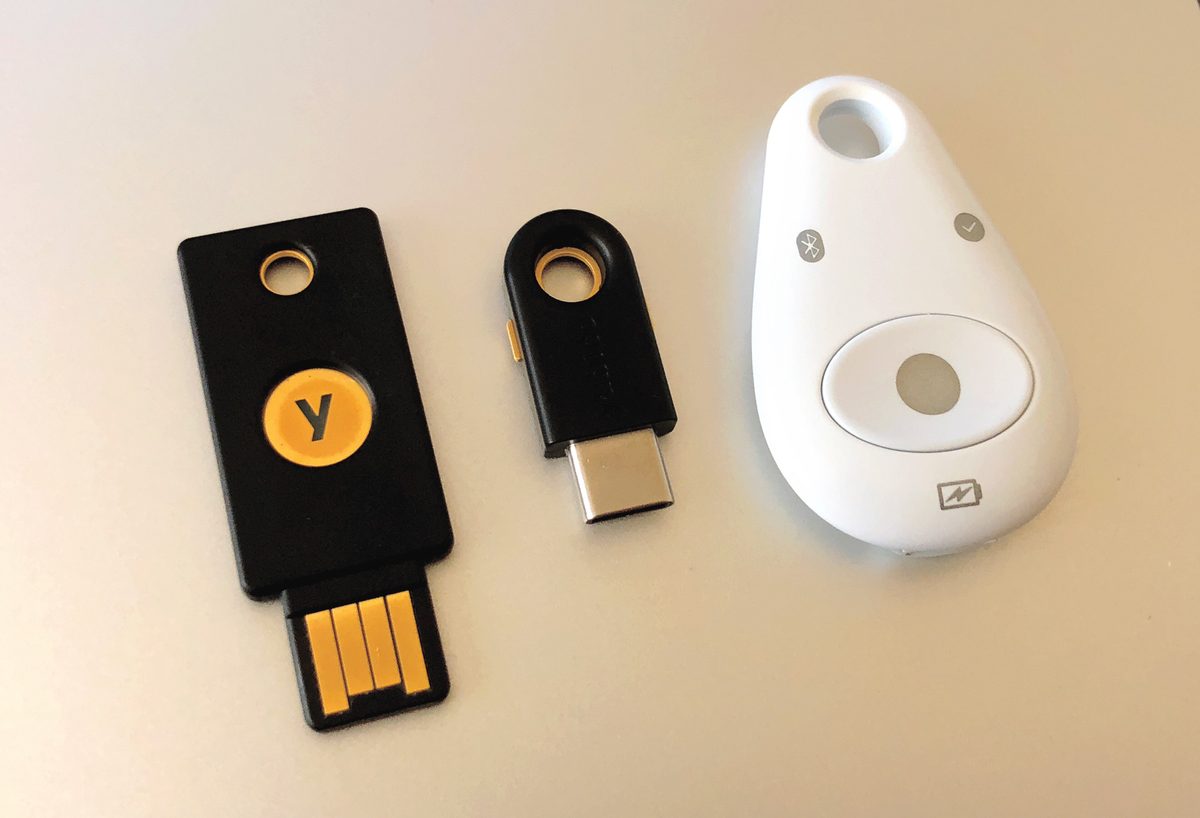
FIDO2 security keys and platform authenticators such as Windows Hello for Business bind the login to the real domain at the protocol level, which defeats AiTM proxies. Start with global admins, tenant admins, break-glass accounts and finance approvers. See the FIDO Alliance overview of FIDO authentication for the underlying standard. Phishing-resistant MFA is the highest single win in any MFA bypass prevention plan.
2. Turn on number matching and location context on every push
Number matching neuters push bombing because the user has to type a code shown on the login page, not just tap “approve”. Adding geolocation and app context onto the prompt closes the “I was tired and tapped yes” failure mode. This is a two-click change per tenant and a massive contribution to MFA bypass prevention.
3. Kill SMS and voice as first-choice factors
SMS is trivially subverted by SIM swaps and by phishing kits that just harvest the code. Leave SMS as a break-glass fallback for account recovery, not as an everyday factor. Removing it is a small change with a large MFA bypass prevention payoff.
4. Enforce conditional access with device and session risk
Block sign-ins from unmanaged devices, from anonymised networks, and from high-risk user or session risk scores. Require compliant devices for admin roles. Conditional access is where MFA bypass prevention stops being a checkbox and starts being an actual boundary.
5. Shorten token lifetimes on high-value roles
An attacker who steals a session cookie is bounded by how long that cookie lives. Shorter access token lifetimes and continuous access evaluation force re-authentication when the risk signal changes. This limits blast radius even if MFA bypass prevention fails at the front door.
6. Audit and prune OAuth application consents
Set an admin-approval workflow for new third-party apps and review the existing consent inventory monthly. Revoke tokens for anything unused or unrecognised. Consent phishing is invisible to a login-focused MFA bypass prevention plan unless you actively govern app permissions.
7. Harden the help desk with a callback-and-verify script
Every MFA reset, temporary bypass and phone-number change must trigger an out-of-band verification against a source of truth (HR system, manager confirmation, camera check). Publish the script and audit it monthly. This is the least glamorous MFA bypass prevention control and one of the most effective.
8. Retire legacy authentication endpoints
Disable basic auth, SMTP AUTH, IMAP and POP where they are still enabled. Break the “one shared mailbox that still uses a password” habit. Every legacy endpoint is a hole underneath your MFA bypass prevention roof.
9. Deploy token-binding and continuous access evaluation where available
Modern identity providers can cryptographically bind a session to the device it was issued on, and revoke it in near real time when a risk signal fires. Turn these on. They are the last-mile of MFA bypass prevention and dramatically raise the cost of a stolen cookie.
MFA bypass prevention across a multi-tenant MSP estate
Rolling one of these controls into one tenant is a Tuesday afternoon. Rolling all nine of them into forty tenants, with evidence, is a programme that needs owned time. This is where MSPs tend to stall: the day team is on tickets, the security lead reviews policies, and MFA bypass prevention becomes something everyone agrees with and nobody schedules.
A workable MFA bypass prevention programme has four moving parts across the estate:
- A baseline scorecard per tenant. One row per client, one column per control, red / amber / green. This is the artefact that turns “we do MFA” into a defensible position.
- A weekly rollout cadence. Two tenants a week is more effective than a burst that stalls. Small batches keep the change advisory board happy and give the SOC time to watch for regressions.
- A hardware-key logistics loop. Enrolment, spare keys, replacements when a user drops one down a train. MFA bypass prevention that depends on physical devices needs an actual supply chain.
- A quarterly review of exceptions. Every “we had to leave SMS on for this one user” is a landmine. Track them, revisit them, close them.
Most UK and EU MSPs have the strategy right and the capacity wrong. The engineers who can lead an MFA bypass prevention rollout are the same engineers being pulled into P1s and new-client onboarding. That is exactly the gap outstaffing was designed to close.
Detection signals for MFA bypass prevention
Even a mature MFA bypass prevention programme will not stop every attempt, so the SOC needs the right signals to catch what leaks through. The most reliable indicators today are:
- Sign-ins from cloud-hosted or VPS IP ranges that have never been used by that user.
- Impossible-travel between the credential-entry IP and the token-use IP within minutes.
- New MFA method registrations that do not match a support ticket.
- OAuth consent grants to previously unseen third-party applications.
- Session cookie use from a user-agent or device fingerprint that does not match the enrolment device.
- Repeated failed push approvals across a short window (MFA fatigue in progress).
Wire each of these into your SIEM or XDR with named playbooks. MFA bypass prevention that lacks a detection layer is a fence with no camera behind it. Government standards bodies emphasise the same layered approach — see the NIST SP 800-63B Digital Identity Guidelines for the authoritative framing of authenticator assurance, replay resistance and verifier compromise.
How OutsourceZA turns MFA bypass prevention into steady work
MFA bypass prevention is not a one-off engagement; it is a rolling programme that needs an owner for every tenant, every week, for as long as the client is on your books. That is a difficult brief for UK and EU MSPs to staff locally at a sensible margin, which is why so many are outstaffing the role.
OutsourceZA supplies vetted South African security engineers who plug into your existing stack — Microsoft Entra, Okta, Duo, Cisco ISE, Jamf, Intune — as an extension of your team, on UK-overlapping business hours, at a 40–60% cost saving versus onshore hires. They own the tenant scorecard, run the weekly rollout batches, keep the hardware-key inventory sane, and produce the evidence pack that keeps insurers and auditors quiet. This is exactly the kind of sustained, evidence-generating work that South African outstaffing suits, because it rewards continuity and English-fluent client contact rather than short bursts.
If you want to see how the model would land on your estate, our IT outsourcing services page walks through the engagement shapes we support, and our IT jobs pipeline gives a feel for the analyst bench we recruit against. When you are ready to talk, contact us and we will scope a two-tenant pilot inside a fortnight — you can also read a little more about the team on about us.
MFA bypass prevention FAQ
Is MFA still worth deploying if attackers can bypass it?
Yes, categorically. MFA still filters the huge volume of low-effort credential stuffing and password spraying that would otherwise land on your tenants. MFA bypass prevention is about tightening the shape of your MFA so that the targeted attacks fail too, not about replacing it.
What is the fastest single win for MFA bypass prevention?
Turn on number matching for push approvals and remove SMS as a default factor. Both changes are configuration, not procurement, and together they neuter push bombing and SIM-swap-style bypasses across the tenant in an afternoon.
Do we really need hardware keys, or is app-based MFA good enough?
App-based MFA with number matching is a strong middle rung. Hardware keys (FIDO2) are the target for privileged and high-value accounts because they defeat AiTM proxies at the protocol level, which app codes cannot. Most MSPs land on a mixed model: keys for admins and finance, apps for the rest, SMS for break-glass only. That is a reasonable MFA bypass prevention posture.
How do we catch the attacks that get through?
Feed sign-in logs, MFA method-registration events, and OAuth consent events into your SIEM with named playbooks. The alert to build first is “new MFA method registered without a matching ticket”. It is the earliest, cleanest indicator that MFA bypass prevention has been circumvented on a specific account.
Can OutsourceZA run this across all our clients or just some?
Either. Many MSPs start with a pilot of two tenants to prove the model, then hand the remainder of the estate over in weekly batches. Because our engineers work UK hours, the handover to your day team is a real conversation, not an overnight email.
Book your consultation
Book a chat with Niel or Johan so we can understand exactly what (and who) you need for your business to succeed. It’s also a great time to ask any questions you may have. See you soon!