
Table of contents
AI SOC automation has moved from conference demo to signed purchase order faster than almost any security technology in recent memory. Teams that spent last year debating whether a model could triage an alert at all are now being asked which alerts it should be allowed to close by itself. For managed service providers across the UK and EU, that shift is uncomfortable in a very particular way: AI SOC automation genuinely does remove a large slice of repetitive work, but it does not remove the need for people who can tell a good verdict from a merely confident one.
This guide is written for MSP owners, service delivery managers and vCISOs who are past the demo stage. It sets out where AI SOC automation earns its keep, where it should stop and hand over, and what has to be true about your team before you let software act inside a client tenant.
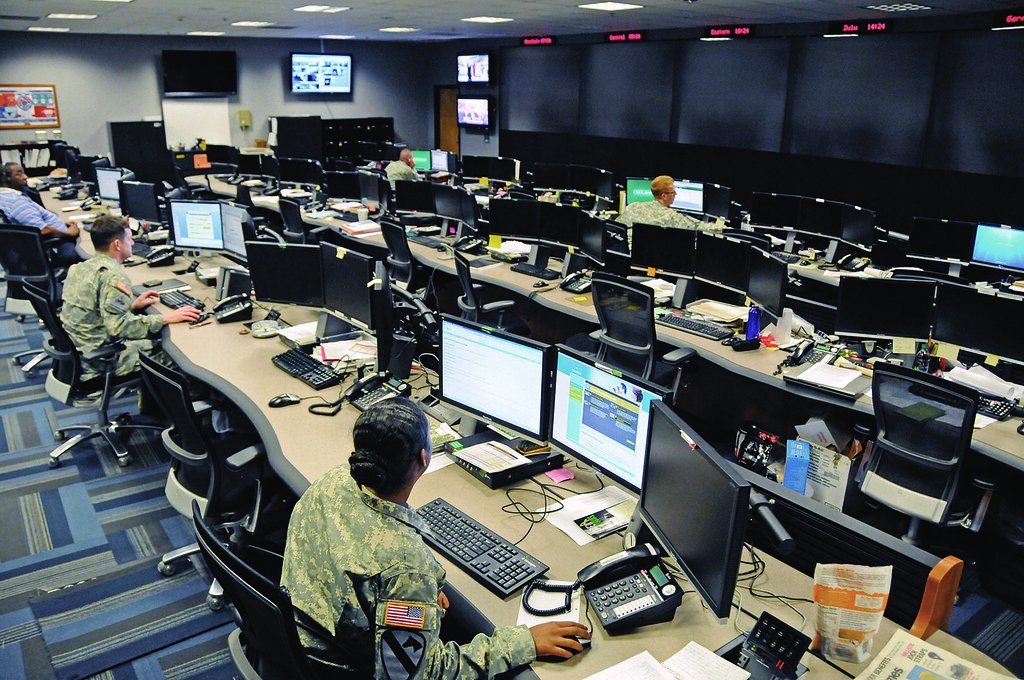
What AI SOC Automation Actually Means in 2026
The phrase covers a spectrum, and a lot of disappointment comes from buyers and vendors standing at different points on it. At the conservative end, AI SOC automation means enrichment: an alert arrives, and software gathers the context an analyst would have gathered manually — asset owner, recent sign-in history, reputation data, related alerts — and presents it in one place. Nothing is decided. The analyst simply starts from a better position.
In the middle sits autonomous triage. Here AI SOC automation reaches a verdict on routine, high-volume alert classes and either closes them with a written rationale or escalates them with a recommendation. This is where most of the measurable time saving lives, and also where most of the governance argument happens.
At the far end sits agentic behaviour: software that plans a multi-step investigation, pivots between tools on its own initiative, and takes containment action. Full agentic AI SOC automation is the version that sells keynotes, and it is the version that deserves the most scrutiny, because the failure modes stop being “wasted analyst time” and start being “we disabled a director’s account during a board meeting”.
Being explicit about which of those three you are buying is the single most useful thing an MSP can do before signing. The design principles published by the UK’s National Cyber Security Centre are a good reference point here: systems should make compromise difficult, make disruption unlikely, and make detection and recovery straightforward. AI SOC automation that cannot be inspected after the fact fails the third test, however good it is at the first two.
Why AI SOC Automation Appeals to Stretched MSPs
The commercial logic is not complicated. A multi-tenant MSP is dealing with alert volume that scales with every client won, while analyst headcount scales with hiring budget and the local labour market. Those two curves diverge, and AI SOC automation is the most obvious lever for closing the gap without a proportional increase in salary cost.
There is a quality argument too, and it is arguably stronger than the cost one. Human triage degrades predictably: the two hundredth identical phishing alert of the week gets less attention than the first. Software does not get bored. Applied to genuinely repetitive alert classes, AI SOC automation produces more consistent handling than a tired human on hour seven of a shift.
What it does not do is manufacture judgement. An MSP that deploys AI SOC automation while cutting the analyst bench tends to discover that the escalations which do arrive are now harder than the ones that used to, because everything simple has already been filtered out. The work that reaches humans is concentrated, not reduced in difficulty. That is a staffing implication, not a tooling one, and it is the part most business cases skip.
Nine Smart Wins From AI SOC Automation
These are the areas where MSPs consistently get value from AI SOC automation without betting the client relationship on it.
1. Alert enrichment before any verdict
Start here. Have AI SOC automation assemble context — device, user, recent activity, related signals — and attach it to the ticket. No decision authority at all. The time saving is real and immediate, and the risk is close to zero because a human still decides everything.
2. Phishing triage as the first autonomous class
Reported phishing is high volume, well understood and largely reversible if handled wrongly. It is the standard first candidate for autonomous AI SOC automation for exactly those reasons, and it builds institutional trust in the system before anything riskier is delegated.
3. Deduplication across tenants
The same vendor advisory or cloud provider incident will generate near-identical alerts across a whole client base. Collapsing those into one investigable item is unglamorous work that AI SOC automation does well and analysts find tedious.
4. Written rationale on every automated action
Insist that AI SOC automation records why it reached a verdict in plain language, not just a confidence score. This is what makes post-incident review possible and what turns an audit conversation from awkward into routine.
5. Detection tuning suggestions
Rules decay. Using AI SOC automation to flag detections that fire constantly without ever producing a true positive gives your engineers a prioritised tuning backlog instead of a vague sense that the noise is getting worse.
6. Shift-handover summarisation
Summarising what happened overnight, what is still open and what needs a decision is a genuinely good use of language models and carries almost no downside risk. It is one of the quickest AI SOC automation wins to demonstrate internally.
7. First-draft client reporting
Monthly security reports consume senior time and are largely formulaic. Letting AI SOC automation produce the first draft — with an engineer reviewing and signing it — frees hours without putting anything in front of a client unreviewed.
8. Reversible containment only, behind approval
Where you do grant action, grant the reversible kind: isolating a device, revoking a session, forcing a password reset. Irreversible actions should not be on the AI SOC automation menu at all in the first year.
9. Measurement of the automation itself
Sample the alerts AI SOC automation closed and have a human re-examine a percentage of them every month. Without this, you have no evidence the system still works after the last model update, and no answer when a client asks.
Where AI SOC Automation Should Stop and a Human Decides
The clearest line to draw is reversibility. Actions that can be undone in minutes are reasonable candidates for delegation once you have evidence the system is reliable on that alert class. Actions that are hard or impossible to reverse — deleting identities, purging mailboxes, rewriting conditional access policy across a tenant, terminating production workloads — should require a named human approval every time, regardless of how confident the system is.
The second line is novelty. AI SOC automation performs well on patterns resembling what it has seen. Genuinely novel activity — the early, ambiguous phase of a targeted intrusion — is precisely where pattern matching is weakest and where an experienced analyst’s unease is most valuable. If your process routes low-confidence findings to a queue nobody staffs, you have automated the easy half and abandoned the hard half.
The third line is consequence beyond the technical. Anything touching legal exposure, regulatory notification, client communication or employment matters needs a human owner. A verdict of “insider data exfiltration” has consequences for a real person, and no MSP should let that reach a client contact without someone accountable having read it first. This is also where the NIST AI Risk Management Framework is worth reading properly rather than citing: its emphasis on accountability and documented human oversight maps cleanly onto SOC decision rights.
Guardrails to Build Before AI SOC Automation Executes
Governance written after deployment is remediation, not governance. Before AI SOC automation is allowed to act rather than advise, four things should exist in writing.
A decision-rights matrix. For each alert class, state plainly what the system may close, what it may recommend, and what it may never touch. Review it quarterly. Vague delegation is how scope creeps.
An audit trail that survives the vendor. Every automated action needs a durable record — what was seen, what was decided, what was done, and which model version did it. Keep it somewhere you control, not only inside the tool. Vendors get acquired and retention policies change.
A defined rollback path. If AI SOC automation isolates forty devices at 3am because of a bad detection, who notices, who reverses it, and how long does that take? Answer this before it happens, not during.
Client-facing disclosure. Your clients should know that automated systems participate in triage of their environment. Most will be entirely comfortable with it. Discovering it during an incident review is how trust gets damaged.
Staffing the Human Half of AI SOC Automation
Every guardrail above is a commitment to sustained human hours. Somebody has to sample closed alerts, maintain the decision-rights matrix, work the low-confidence queue and review the escalations that the system could not resolve. This is steady, scheduled, evidence-generating work — and it is exactly the work that gets quietly dropped when a UK service desk is already at capacity.
This is where outstaffing changes the economics of AI SOC automation rather than merely reducing its cost. OutsourceZA places skilled South African security and infrastructure engineers directly into MSP teams, typically at 40–60% of the equivalent UK salary cost. South Africa sits in a timezone that overlaps the full UK and EU working day, which matters more here than it does for most roles: automation review is a conversation, not a batch job, and an analyst who is awake when your escalation engineer is awake can actually query a verdict rather than leave a note about it.
Practically, MSPs use an outstaffed analyst to own the parts of AI SOC automation that have no natural home: the monthly sampling exercise, the tuning backlog, the quarterly decision-rights review, the low-confidence queue. These are not junior tasks, but they are schedulable ones, which makes them well suited to dedicated capacity rather than whoever happens to be between escalations. You can see how the model works on our IT outsourcing services page, and engineers considering this kind of role can look at current IT jobs with us.
A 90-Day AI SOC Automation Rollout Plan
Days 1–30: baseline and enrich. Before switching anything on, capture what today looks like — alert volume by class, median time to triage, how many alerts are closed without investigation. Without a baseline you will be unable to prove AI SOC automation helped. Then deploy in enrichment-only mode. No verdicts, no actions.
Days 31–60: shadow mode. Let AI SOC automation reach verdicts but take no action. Analysts work alerts normally, and you compare the system’s verdicts against theirs. Disagreements are the valuable output. If agreement on your chosen first alert class is poor, that is a finding worth having before you delegated anything.
Days 61–90: narrow autonomy. Grant closing authority on one alert class only — phishing is the usual choice — with mandatory sampling of closed alerts and a documented rollback path. Expand only when the sampling data supports it. An MSP running one alert class well after ninety days is in a far better position than one running six classes it cannot evidence.
The pattern across all three phases is the same: AI SOC automation should earn each increment of trust with evidence you generated yourself, not with a vendor benchmark. If you would like to talk through how this maps onto your own service desk, get in touch.
AI SOC Automation FAQ
Will AI SOC automation replace security analysts?
Not on any realistic horizon. It replaces particular repetitive tasks. The analysts who remain spend proportionally more time on ambiguous and novel work, which is harder than what was automated away. Most MSPs find the skill requirement goes up rather than down.
What should we automate first?
A high-volume, well-understood, reversible alert class — reported phishing for most MSPs. It gives you a meaningful time saving and a low-stakes environment in which to learn how your AI SOC automation behaves before anything riskier is delegated.
How do we know the automation is still accurate six months in?
Sample and re-examine. Pick a percentage of automatically closed alerts each month and have an analyst review them independently. This is the only practical way to detect drift after model or detection changes, and it is the evidence a client will eventually ask for.
Do clients need to be told that AI SOC automation is used in their tenant?
Yes. Contractual positions vary, but disclosure is straightforward and avoids a difficult conversation later. Framing it as a documented, supervised process with defined human decision points is usually reassuring rather than alarming.
Can a smaller MSP do this without a dedicated security team?
Yes, provided the oversight work has a named owner with protected time. The failure mode for smaller MSPs is not buying the wrong tool — it is deploying AI SOC automation and assuming the review work will fit around existing ticket load. It will not, which is why dedicated outstaffed capacity is often the practical answer. You can read more about us and how we work with MSP teams.
Book your consultation
Book a chat with Niel or Johan so we can understand exactly what (and who) you need for your business to succeed. It’s also a great time to ask any questions you may have. See you soon!